How to show up in ChatGPT results
To show up in ChatGPT results, make sure ChatGPT’s search crawler can reach your site, publish pages that directly answer the questions your customers ask, and get your business mentioned on the websites ChatGPT already cites for those questions. Then check regularly, because ChatGPT’s answers change over time.
1. Let ChatGPT’s search crawler in
OpenAI uses a crawler called OAI-SearchBot to find pages for ChatGPT search. If your robots.txt blocks it, or a firewall rule blocks unknown bots, your pages can’t be cited. Check your robots.txt and your hosting or CDN bot settings. (OpenAI’s GPTBot is a separate crawler used for training; allowing or blocking it is a separate choice.) OpenAI documents its crawlers at platform.openai.com/docs/bots.
2. Answer the question on a page, first thing
AI answers are stitched together from pages that answer the question plainly. Give each important question its own page or section, put the direct answer in the first two sentences, then the detail: steps, prices, areas you serve, who it’s for. Use headings that read like the questions people ask. Make it obvious who you are: business name, location, what you do.
3. Be where ChatGPT is already looking
For any question, ChatGPT tends to cite a particular set of websites: industry publications, directories, review sites, forums, YouTube. Those pages are your shortlist. A mention there (a guest article, a listing, a genuine forum answer, a review) puts your name inside a source the AI already trusts.
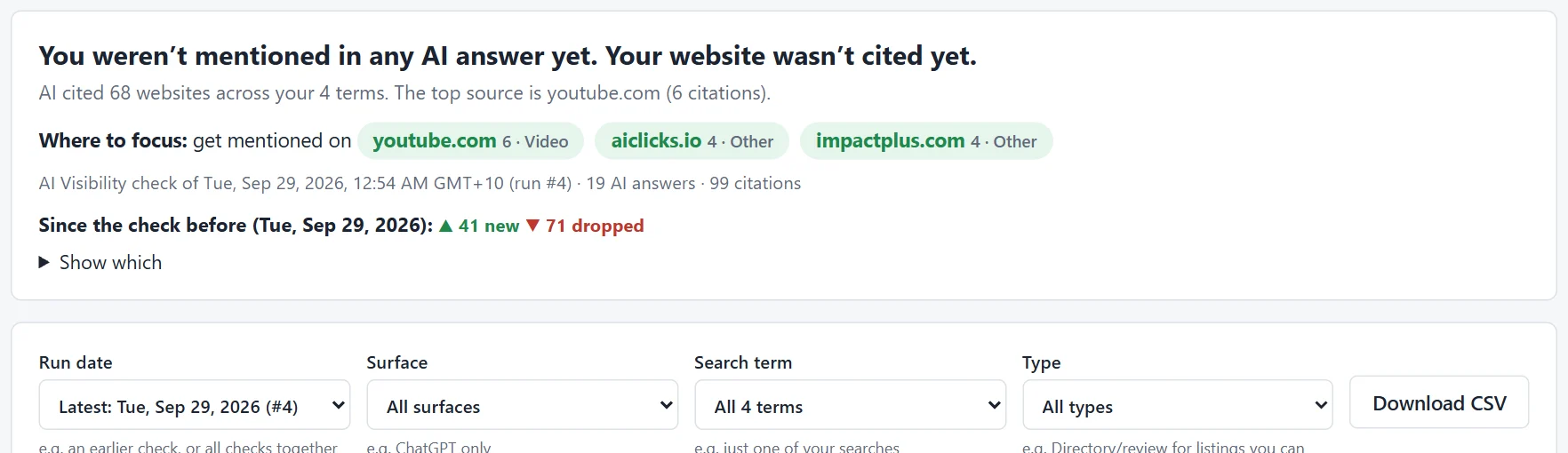
You don’t have to guess which sites they are. When we checked four questions about AI visibility on Tue 29 September 2026 in the United States, the AI answers cited 68 different websites, and the most-cited was YouTube. The Citations tab lists them for your own questions:
4. Keep your details consistent everywhere
Your name, address, category and description should read the same on your site, your Google Business Profile, directories and social profiles. Consistent details make it easier for any AI to be confident it’s talking about you.
5. Measure, then repeat
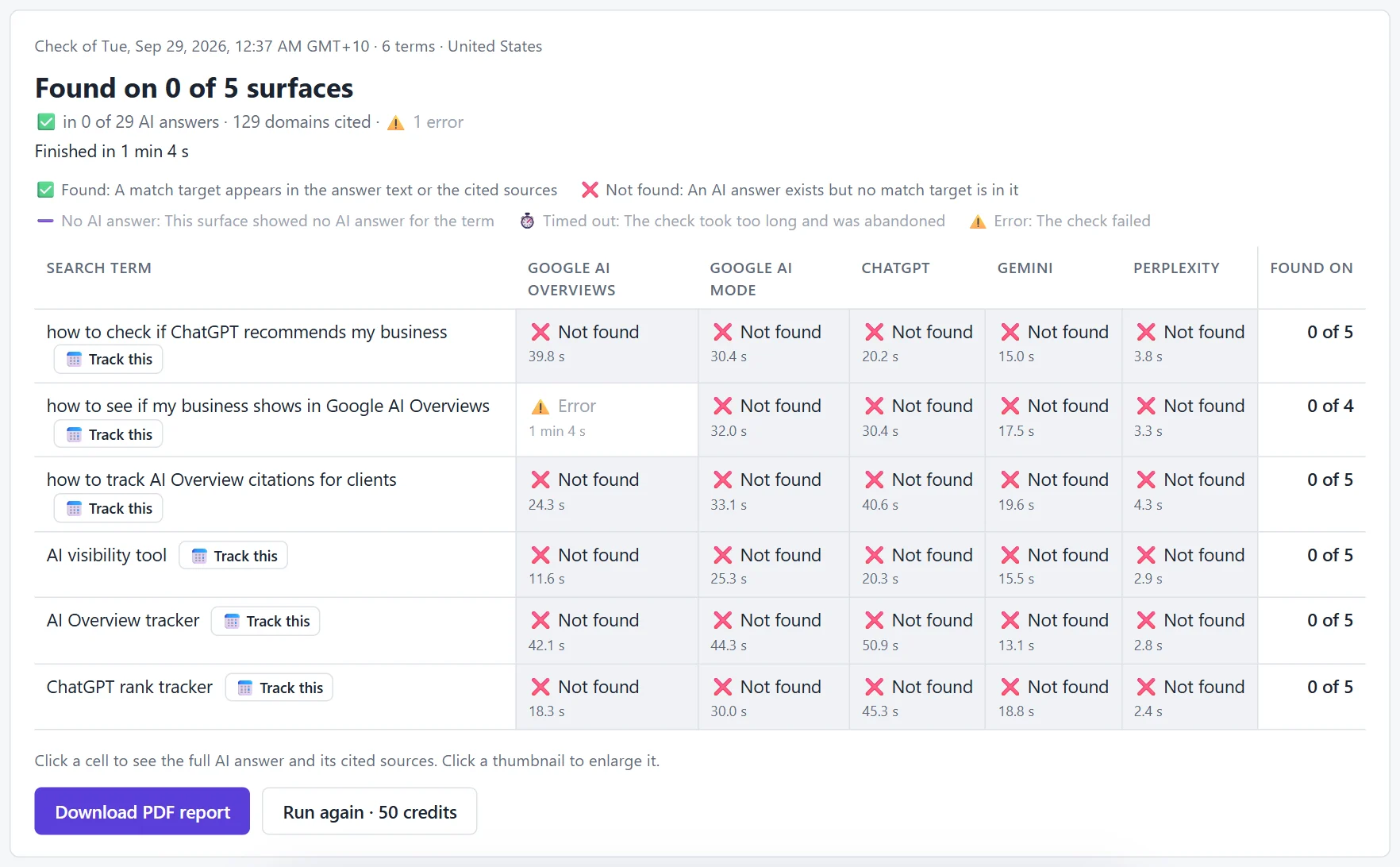
Pick the questions that matter, check them on a schedule and watch what changes. We’re doing exactly that for RankResults itself. Here’s our honest starting point: not found anywhere.
To see where you stand, start with how to check if ChatGPT recommends your business.
Questions people ask
How do I show up in ChatGPT results?
Let OpenAI’s search crawler (OAI-SearchBot) reach your site, answer your customers’ questions directly on your pages, and get mentioned on the websites ChatGPT already cites for those questions. Then check regularly, because ChatGPT’s answers change.
Can I pay to show up in ChatGPT’s answers?
There’s no way to buy a place in ChatGPT’s written answers. What you can do is make your pages easy to find and cite, and get mentioned on the sites it already uses as sources.
Should I block GPTBot?
That’s your choice and it’s separate from showing up in ChatGPT search. OpenAI says OAI-SearchBot is the crawler used for search results, while GPTBot is used for training. Blocking GPTBot doesn’t block OAI-SearchBot.
How long does it take to start showing up?
Nobody can promise a timeframe, and we won’t. That’s exactly what our public case study measures: we’re tracking our own questions from zero and will show the date each surface first finds us.
Does ranking on Google help with ChatGPT?
Often the pages ChatGPT cites also rank well in regular search, but not always. Check both: RankResults shows your Google ranking and your AI visibility for the same questions side by side.
Related guides
